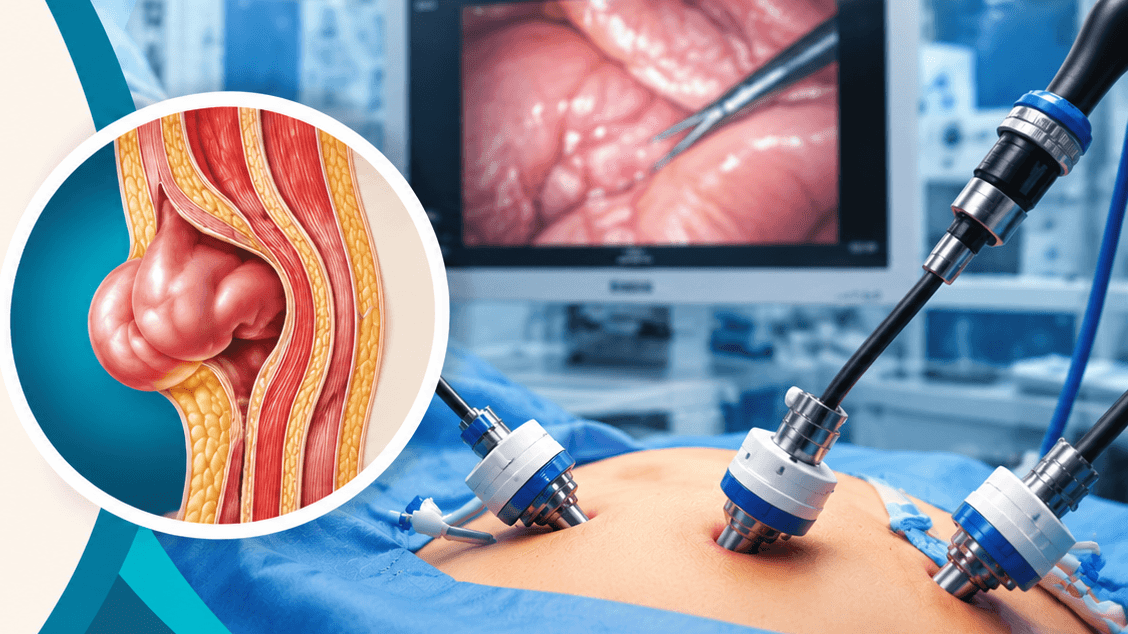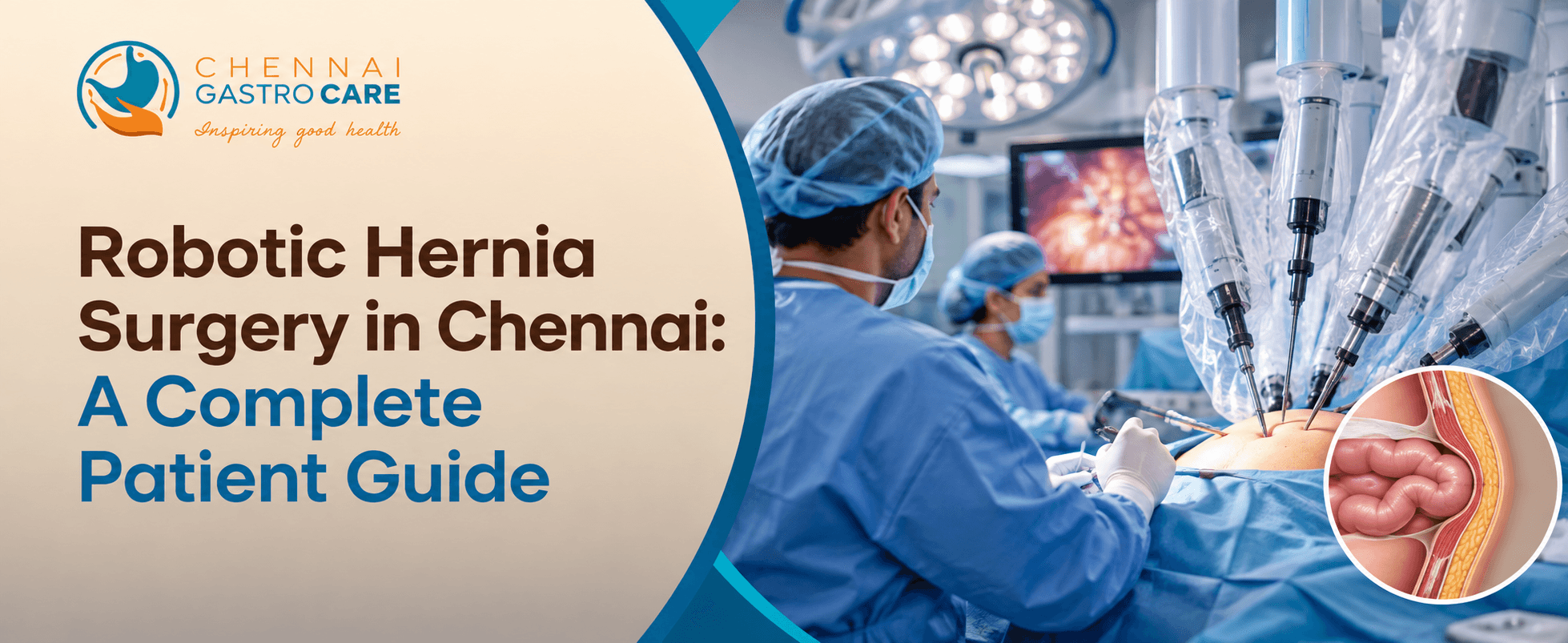

Robotic hernia surgery represents a major advance in how surgeons repair hernias, small tears in abdominal muscles that allow tissue to bulge outward. Modern minimally invasive techniques in chennai gastro care now offer precise repair with smaller incisions, less pain, and faster healing than traditional open repair. This guide explains what robotic hernia surgery is, when it's appropriate, and why more patients choose hernia surgery in Chennai using this approach.
What Is Robotic Hernia Surgery and How Does It Work?
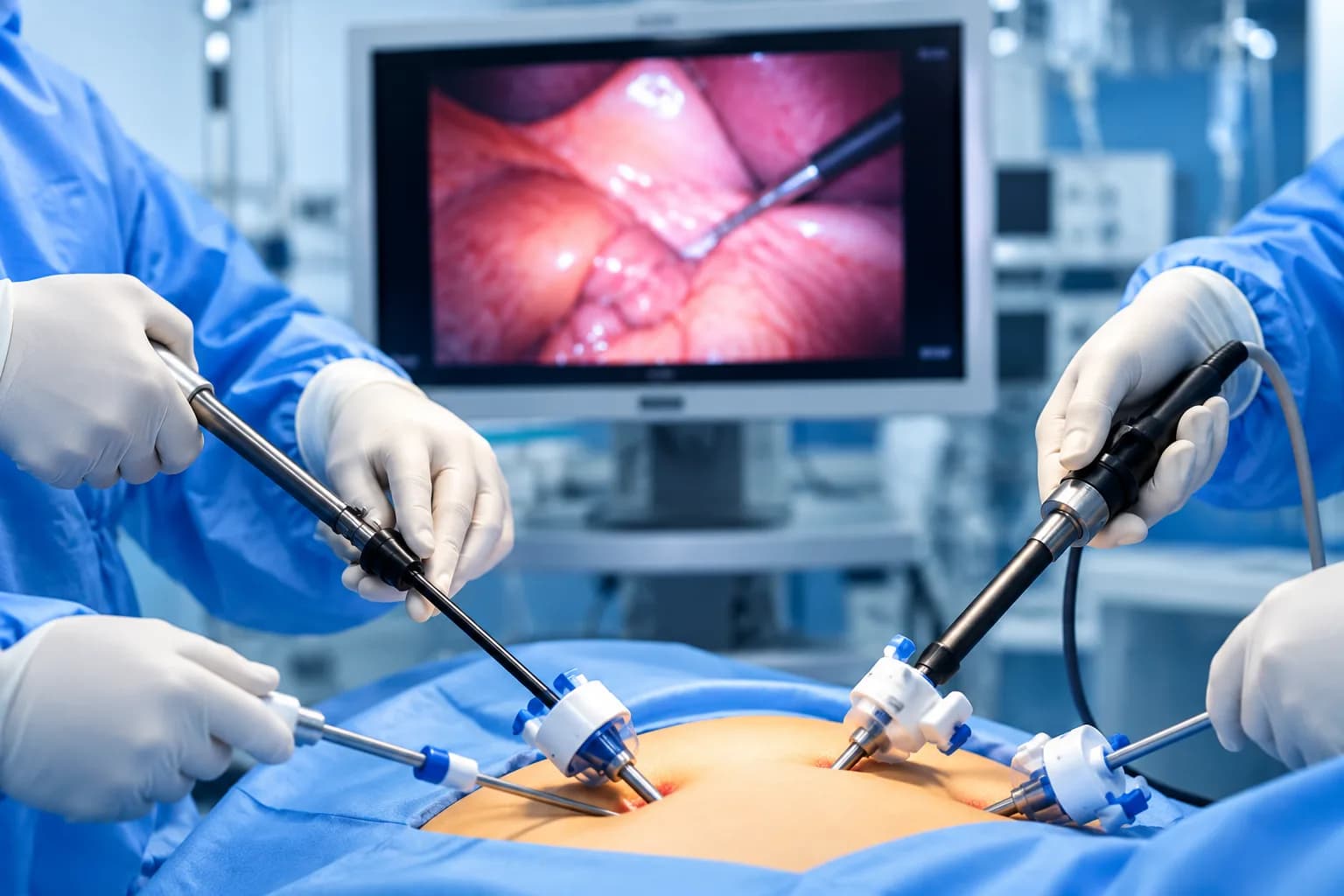
Robotic hernia surgery is a minimally invasive procedure in which a surgeon uses a robotic console and specialised instruments to repair hernias through small incisions. Unlike open surgery, which requires one large cut, robotic surgery uses several tiny portals through which a camera (endoscope) and surgical tools pass. The surgeon sits at a remote console, viewing a magnified, three-dimensional image of the surgical area, and controls the robot's arms with precision movements. Why it matters for patients:
- The robot's instruments can bend, rotate, and move in ways the human hand cannot, allowing precise stitching of the hernia mesh or tissue.
- Incisions are typically 5-10 millimetres each, so patients experience less trauma to surrounding muscle and tissue.
- This means reduced pain, shorter hospital stays, and a faster return to normal activities.
- Robotic technology is especially valuable for complex hernias, recurrent repairs, or multiple abdominal hernias, where precision and tissue preservation are critical.
Understanding Different Types of Hernias
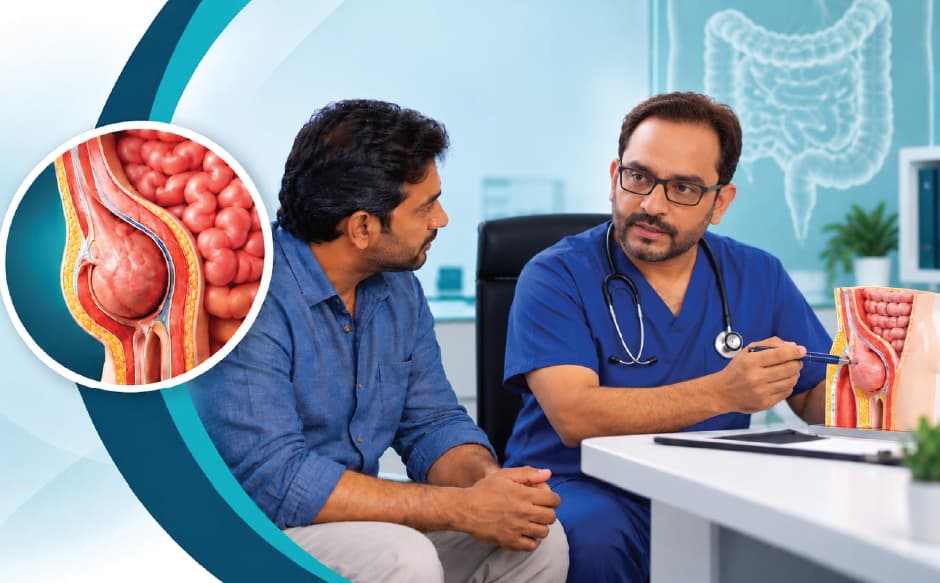
Hernias occur when an internal organ or tissue pushes through a weak spot in the abdominal wall, creating a noticeable bulge or discomfort. The surgical approach, robotic, laparoscopic, or open, depends on which type you have.
| Hernia type | Location | Notes |
|---|---|---|
| Inguinal hernias | Groin | Most common type, about 70% of all abdominal hernias; affects men, women, and children |
| Femoral hernias | Lower abdomen, near the thigh | Less common than inguinal, similar groin-area presentation |
| Umbilical hernias | Around the navel | Can occur in adults and children |
| Incisional hernias | Along a previous surgical scar | Often develop months or years after abdominal surgery if the wound didn't heal properly |
| Hiatal hernias | Diaphragm | Occurs when part of the stomach pushes through the diaphragm; may require upper gastrointestinal expertise |
Understanding your hernia type helps your surgeon recommend the best surgical strategy.
Why Choose Minimally Invasive Approaches Over Open Surgery?
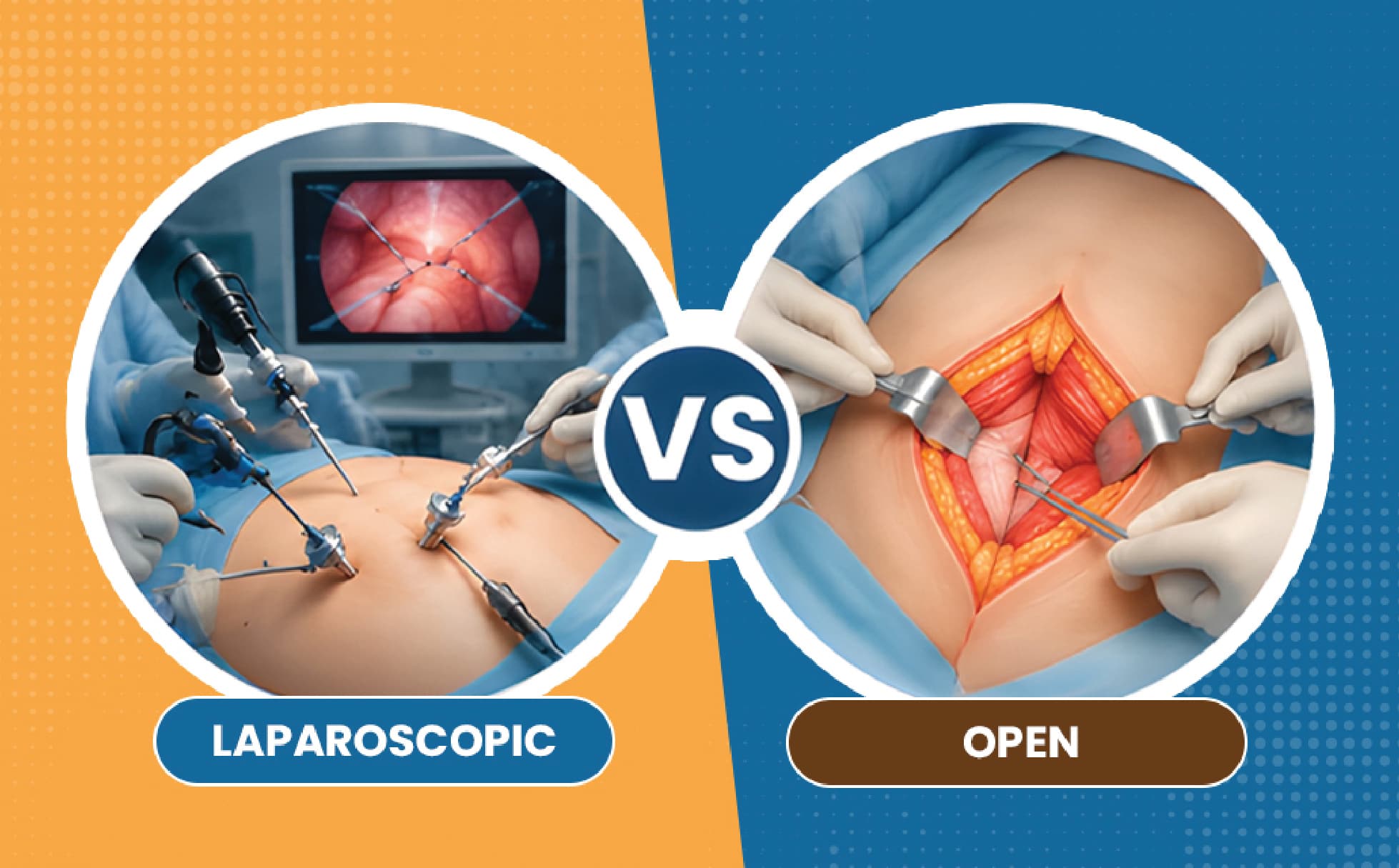
Open hernia repair involves a single large incision through which the surgeon directly accesses the hernia. It's effective and sometimes necessary, but carries higher risks of infection, prolonged pain, and a longer recovery, often 4-6 weeks before light activity.
Minimally invasive methods, including robotic and standard laparoscopic surgery, reduce tissue damage:
- Smaller incisions mean less blood loss, reduced pain, and faster wound healing.
- Patients typically resume normal activities within 1-2 weeks, vs 4-6 weeks for open surgery.
- Lower infection rates and less scarring.
- Robotic surgery refines laparoscopy further with superior visualisation and precision, especially in complex or recurrent cases. Not every hernia suits minimally invasive repair. Your surgeon will assess hernia size, medical history, and whether mesh can be safely placed to determine whether robotic, laparoscopic, or open hernia surgery in Chennai is best for you.


The Robotic Hernia Surgery Procedure Explained
1. Pre-operative review. Your team reviews medical history, imaging, and anaesthesia plan. 2. Anaesthesia and incisions. Under general anaesthesia, the surgeon makes 2-4 small incisions (5-10 mm each). 3. Visualisation. A tiny camera shows the hernia site on a high-definition screen. 4. Instrument placement. Specialised instruments, controlled at the robotic console, go through the other incisions. 5. Repair. The surgeon dissects tissue around the hernia opening, checking for organ or tissue involvement. 6. Mesh placement. A sterile, biocompatible mesh reinforces the weakened muscle wall, secured with absorbable stitches or tacks. 7. Closure. Incisions are closed with dissolvable sutures or skin adhesive.
The procedure usually takes 30-90 minutes, depending on complexity, with less post-operative bleeding and bruising than open surgery.
Recovery and What to Expect After Surgery
Recovery after robotic hernia surgery is notably faster than after open repair. Most patients go home the same day or after an overnight stay. Pain is usually mild and well-controlled with pain relievers for the first week or two.
| Timeframe | What to expect |
|---|---|
| Week 1 | Rest, keep incisions clean and dry, avoid heavy lifting. Light walking promotes circulation and prevents blood clots. |
| Week 2 | Many patients resume light desk work or household activities. |
| Weeks 3-4 | Full recovery, including exercise and heavier lifting (vs 6-8 weeks after open surgery). |
Your surgeon will schedule follow-ups to check healing. Infection, seroma (fluid collection), or hernia recurrence are rare but possible, report excessive pain, swelling, or drainage immediately.
Why Choose Us for Hernia Surgery in Chennai
- Experienced colorectal and upper GI surgeons trained in minimally invasive techniques.
- NABH accredited (National Accreditation Board for Hospitals and Healthcare Providers).
- Robotic surgical systems for superior visualisation, precision, and control.
- Compassionate, shared decision-making care from consultation through recovery.
- Bariatric and gastroenterology services, so a hernia related to obesity or reflux disease can be addressed alongside the repair.
- Dedicated post-operative nursing and recovery protocols.
If you have a hernia causing discomfort, or a hernia repair that recurred, schedule a consultation to build a treatment plan suited to your needs.
Book an Appointment With Chennai Gastro Care Team
Living with an untreated hernia rarely gets easier on its own, and delaying treatment can sometimes turn a straightforward repair into a more complex one. If you've noticed a bulge, discomfort, or pain that worsens with activity, it's worth getting evaluated sooner rather than later.
Our team in Chennai brings together experienced colorectal and upper GI surgeons, robotic and laparoscopic surgical technology, and a NABH-accredited standard of care, so you're not choosing between convenience and quality. Every consultation starts with a clear, honest conversation about your specific hernia, the treatment options available to you, and what recovery will realistically look like based on your health and lifestyle.
Whether you're exploring surgery for the first time or seeking a second opinion after a recurrence, we're here to guide you through each step, from diagnosis to full recovery. Our team also offers bariatric and gastroenterology services, so related digestive concerns can be addressed alongside your hernia care, under one roof.
Book an appointment with our specialist team for hernia related queries today to get a personalised assessment and a clear path forward for your hernia care.